SEO Internal Linking Case Study: How Strategic Linking Transformed Organic Traffic
The impact of Internal Linking is significant. And this blog aims to show how my client drove a traffic explosion after implementing a new strategy.
Previously, The site has lived for years, but just has minimum content creation and low backlink profiles. Yet, the site struggles to witness the spike in the traffic and impressions.
That flat line became my first real SEO challenge. And six months later, it turned into a dramatic traffic spike that changed everything.
This is a complete internal linking case study of exactly what happened: the problems I found, the strategy I built, and why it took until month six for the breakthrough to finally arrive.
Introduction of Client and Problem I noticed
This client was one of the Luxury Resorts of Nepal, and has been living there since 2013. Previously, it was in a different name, but when I was assigned to this, it was in the transaction phase of rebranding.
Rebranding can be a good choice if it is planned, but unfortunately, it might not be for my case. It uses a domain of the previous name, and promotes their branding with the new name in the website copy.
Along with this, these are my five major problems that are stacked on top of each other to limit growth, but still help to drive traffic at some level.
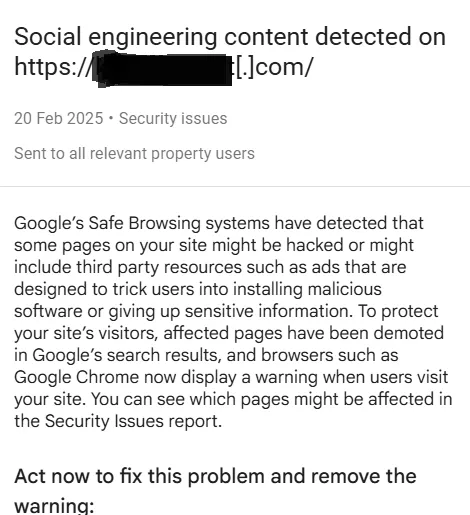
Security Flag: Website was flagged with deceptive content by Google, starting from Febraury 2025, but when I was assigned, it was already May. But Fixing was not done even for two more months as it requires to be done by client side developers.
Search Intent Mismatch: Like mentioned, there were minimal efforts on content creation and there were only ten existing blogs, and out of them, just one of them was aligned with what users were actually searching for. And remaining were written for the client’s promotional goals, not for real search queries. Google doesn't reward that.
NAP Inconsistency: The resort had rebranded, but old business listings across the web still showed the previous NAP (name, address, and phone number). That kind of inconsistency confuses search engines.
Thin Content: Several key pages had almost nothing on them. Not enough to compete, not enough to rank.
Basic Technical Neglect: Missing image alt text, poorly optimized meta tags, and zero on-page fundamentals across the site.
Any one of these would have been a problem. All five together? That explained the flatline perfectly.
Phase 1
I joined the agency on May 5, 2025 and I was very new for the SEO task. This keeps me away from pushing major changes immediately. So, my work for months is limited into those I can fix myself.
Starting with renaming the image alt text, across the entire site there are around 1100 images used in the site. Many of them had a invalid image name which required updating a new image with a new name.
In my second priority, I rewrote meta descriptions to actually match search intent for particular blogs or money-making pages. I also added relevant images to blog posts that had none.
Phase 2
In this phase, my work turns to content strategy. Previously, clients wanted promotional content, highlighting their amenities, packages, and why you should book for a stay.
Even in the first months of my joining, I do similar types of blogs.
So, I made a call. I stopped following their topic suggestions and started targeting what users actually wanted to know. But the best part is, I was able to persuade them of the motive of writing those topics.
The topics I developed:
- Best Time to Visit Chitwan
- Reasons to Visit Chitwan National Park
- Top 7 Facts About Chitwan National Park
- Packing List for Chitwan National Park
- How to Travel from Kathmandu to Chitwan
- How to Travel from Pokhara to Chitwan
Here's something I realized only later: I had accidentally built a topic cluster. I didn't know the formal term at the time. But creating six pieces of content all orbiting the same subject — Chitwan tourism — naturally built topical relevance. Each article supported the others.
The one piece I never got approval to build was a proper pillar page. That would have tied everything together even more powerfully. Still frustrating, honestly.
By June and July 2025, the graph had stopped being completely flat. Small peaks started appearing. Not dramatic. But the site was waking up.
Further Read: Content That Looked Perfect but Failed to Rank | Failed Case Study
Phase 3
This is the part of this internal linking case study that matters most.
Around this period, I got serious about studying how PageRank actually flows between pages. The idea is simple: authority doesn't stay on one page. Instead they can be transferred from one page to another.
If a high-authority page links to a newer page with the right anchor text, it passes some of its ranking power along.
…and I built a system around this.
Anchor text selection: I identified keyword-rich phrases that fit naturally inside existing content. Not forced, not obvious — just organic links that also happened to signal relevance to Google.
Relevancy matching: Every internal link connected content that was genuinely related. "Best Time to Visit Chitwan" linked to "Packing List for Chitwan" in places where that transition made sense to a real reader.
Contextual placement: No links buried in footers or shoved into sidebars. Every link lived inside the main content body where readers would actually see it and where Google weights it most heavily.
Authority mapping: I identified which existing pages had the most authority and created deliberate pathways to flow that authority toward newer content I wanted to rank.
August through October 2025, traffic kept climbing. Slowly, consistently. The baseline was rising. Keyword positions were improving. In October, I hit 1,000 impressions for the first time. I was genuinely excited about that.
But the big moment hadn't come yet.
Phase 4: Promoting the Content
By leveraging a resort’s social media channels, Google business profiles, and other bookmark.
After publishing each piece, I shared it across the resort's social media channels, pushed it through their local business profiles, and engaged with relevant tourism communities.
Reddit also helped a lot with this process.
This wasn't a formal link-building campaign. I wasn't doing outreach. But it generated initial traffic signals and engagement that helped establish content credibility in Google's eyes even without anyone else linking to the site.
November 2025: The Spike That Made It All Make Sense
Month six.
The Google Search Console graph shows something I still look at with a kind of disbelief. After a year of flatline traffic and five months of slow, steady improvement — the traffic shot upward. Not gradually. Vertically.
Here's why I think it happened then and not earlier.
Internal linking maturity: Six months of strategic linking had created a web of authority distribution throughout the site. Google had enough time to evaluate and reward it.
Topical authority recognition: Half a dozen articles about Chitwan tourism, all interconnected, had established the site as a genuinely relevant source on this specific subject.
Trust threshold reached: Google's algorithms needed time to assess content quality and user behavior. By November, enough data existed to confirm the content deserved better visibility.
Seasonal amplification: November marks the start of peak tourism season for Chitwan National Park. Better rankings at exactly the right time multiplied the impact.
Cumulative effect: Every alt text update, every intent-aligned article, every internal link had been quietly building. November was when that accumulation crossed the threshold.
The spike wasn't a fluke. And here's the proof — December and January didn't drop back down. The elevated traffic held. The new baseline stuck. By January 2026, the site was sustaining performance levels that would have been unimaginable in April 2025.
Average position: 11 on Google Search.
Further Read: Internal Links vs External Links: What's the Difference in SEO
What I Would Do More
Hindsight makes things obvious that weren't at the time.
More content, faster: If I had budget and approval, I'd have pushed for at least 10 articles per month for the first three months. That kind of concentrated output might have triggered the breakthrough in month three instead of month six.
A pillar page from day one: A comprehensive "Complete Guide to Chitwan National Park" would have served as the hub for every supporting article, making the internal linking structure far more powerful and giving the site a real link-acquisition target.
Backlink acquisition in parallel: The no-backlink result is impressive, but it wasn't the plan — it was a constraint. Adding quality backlinks through travel blog partnerships, guest posts, or digital PR would have accelerated everything.
Faster client education: So much time was lost negotiating approvals and managing expectations. If I'd invested more upfront in helping the client understand SEO timelines, I could have moved faster on critical changes.
What This Internal Linking Case Study Actually Proves
A few things I'll carry into every project from here.
SEO has a tipping point. For five months, the graph looked discouraging. Nothing appeared to be working to anyone watching it casually. But underneath the surface, authority was accumulating, relevance was building, and Google was forming a verdict. Month six was when that verdict arrived.
Internal linking is underused. Almost every SEO conversation focuses on backlinks and technical issues. This case study shows that a well-executed internal linking strategy — with proper anchor text, contextual placement, and authority mapping — can drive dramatic traffic growth even on a site with zero external links.
Intent always wins. The content the client wanted me to write would never have ranked. The content I created for real search queries built sustainable organic traffic. Every time I had to push back on promotional topics, the results later justified that push.
Patience is a strategy. If I had abandoned this campaign in month three or four, it would have looked like a failure. The breakthrough was always coming — but only because the foundation was being built consistently through the months when nothing seemed to be happening.
Further Read: What Internal Linking Actually Does to Your SEO (A Real Example)
Want help with your project? Get in touch .