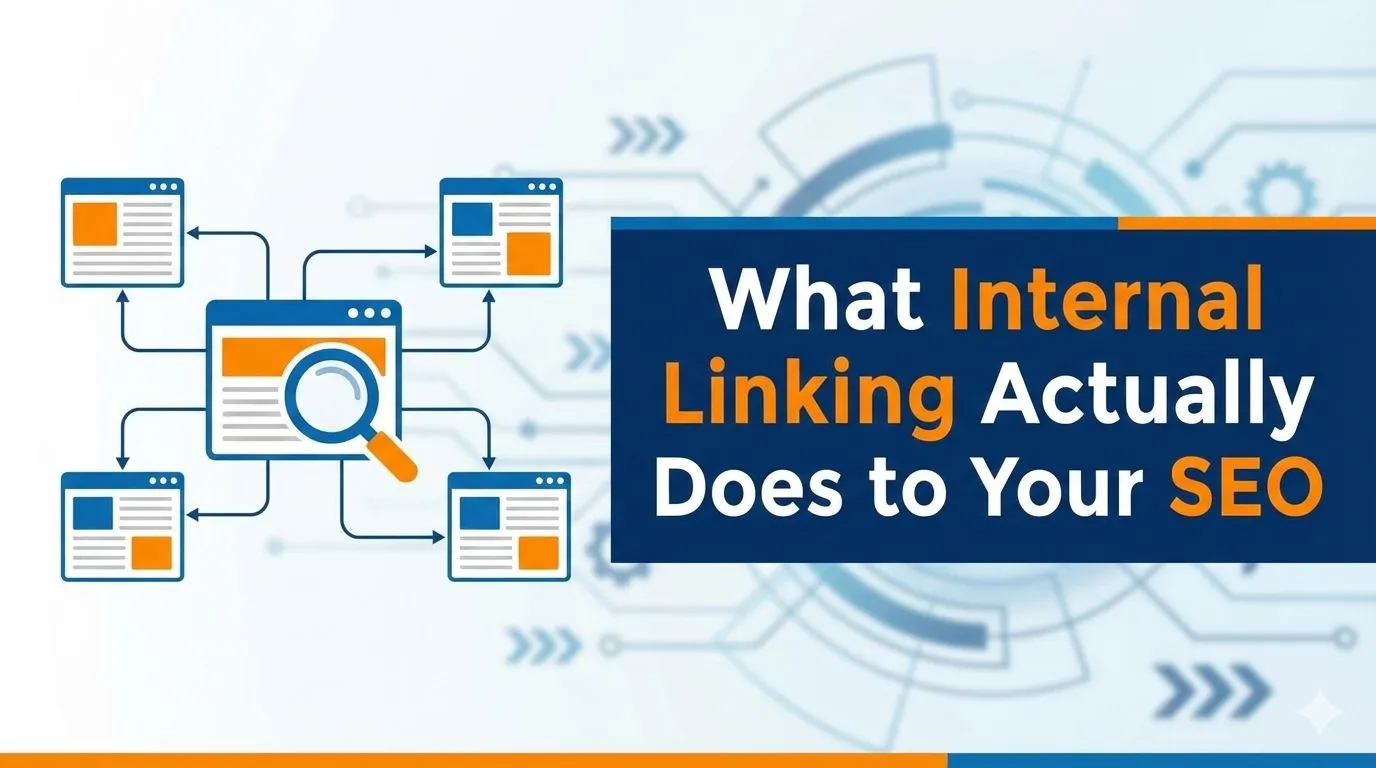
What Internal Linking Actually Does to Your SEO
Most beginners spend months obsessing over content and backlinks while completely ignoring internal linking. I get it—it's not the sexiest topic. But after watching a colleague post blogs with bare, naked URLs as anchor text, I had to step in.
What happened next genuinely surprised even me.
The Moment That Started This Conversation
I was at work, casually checking in with a colleague. He was uploading a blog someone else had written. Normal task, nothing special.
So I watched how he did it.
He was dropping internal links as raw URLs—literally pasting /some-page directly into the blog body. No anchor text. No context. Just a dangling URL sitting there.
I asked him to pull up Google Search Console for that client. Three months of data. Impressions and clicks.
Then I showed him what I had done on a different section of the same site—one where I had properly structured the internal linking.
The difference was visible. He immediately wanted to know what I had changed.
I told him it wasn't some complicated technical trick. It was just internal linking done right.
What Internal Linking Actually Means
Here's how I explained it to him.
Think of authority as heat. High-performing pages on your site—pages with strong backlinks, good engagement, or a solid ranking history—hold a lot of that heat.
When you internally link from one of those pages to another, you're transferring some of that heat over. The linked page gets a boost in authority, which helps it rank better over time.
This is why I always say on-page SEO is more powerful than most people give it credit for. Everyone wants backlinks from other websites, but the internal link equity you already own?
It's sitting there untouched if you're not linking deliberately. I've seen this play out firsthand—and I actually broke it down with real numbers in my internal linking case study.
The Three Things You Need to Get Right
I didn't just tell him to "add internal links." That's useless advice. I broke it down into three checks:
Relevancy — The page you're linking to must be topically connected to the content where the link appears. Linking a blog about keyword research to a page about local SEO just because they're both "SEO topics" is too loose. The relevance has to be tight and natural.
Placement — Where you drop the link in the content matters. A link buried at the bottom of the article carries less weight than one embedded mid-paragraph where the reader is actively engaged. The first few paragraphs and within the main body of the content are typically the strongest placements.
Context — This is what separates a useful internal link from a spammy one. The anchor text needs to describe the destination page accurately. Not "click here." Not a naked URL. A real phrase that tells both the reader and Google what they'll find on the other side.
Why Naked URLs Are Killing Your Rankings
A naked URL as anchor text passes zero descriptive context. Google's crawlers use anchor text to understand what the linked page is about. When your anchor text is just a raw URL, you're essentially pointing at a door without telling anyone what's inside.
Compare that to linking a phrase like how to choose the right keywords inside a relevant paragraph. Google now knows the destination page is about keyword selection. That's the signal that helps rankings.
My colleague's mistake wasn't laziness. He just hadn't been taught the why behind internal linking. Once he understood it was about transferring authority with context and precision, the whole thing clicked.
And honestly, this is one of those SEO mistakes beginners make that nobody talks about enough—because it doesn't look wrong until you understand what's actually happening under the hood.
What I Want You to Take Away from This
Internal linking isn't a technical afterthought. It's one of the most controllable levers you have in SEO.
You don't need new backlinks. You don't need to rewrite your content. You already have pages on your site sitting on untapped authority. Internal linking is how you redistribute that authority to the pages that need it most.
If you want to go deeper on the actual strategy side, check out my blog to read more about how I approach these concepts systematically.
Start auditing how your existing pages link to each other. Check the anchor text. Check the placement. Check the relevance.
Do all three right, and internal linking stops being an afterthought—and starts being one of the most effective things you do this week.
Want help with your project? Get in touch .