Why My Perfect SEO Content Failed to Rank | Failed Case Study
Sometimes you do everything "right" and still get it wrong. Let me tell you about the content I was certain would rank on page one and why it's still struggling.
The Chitwan Resort Project
I was optimizing content for a resort in Chitwan. They had two separate articles that were performing poorly: "Things to Do in Chitwan" and "Adventure Activities to Do with Family." Both covered similar ground, and the traffic was divided between them.
Classic keyword cannibalization, right? The solution seemed obvious: combine them into one comprehensive piece.
My "Perfect" Solution
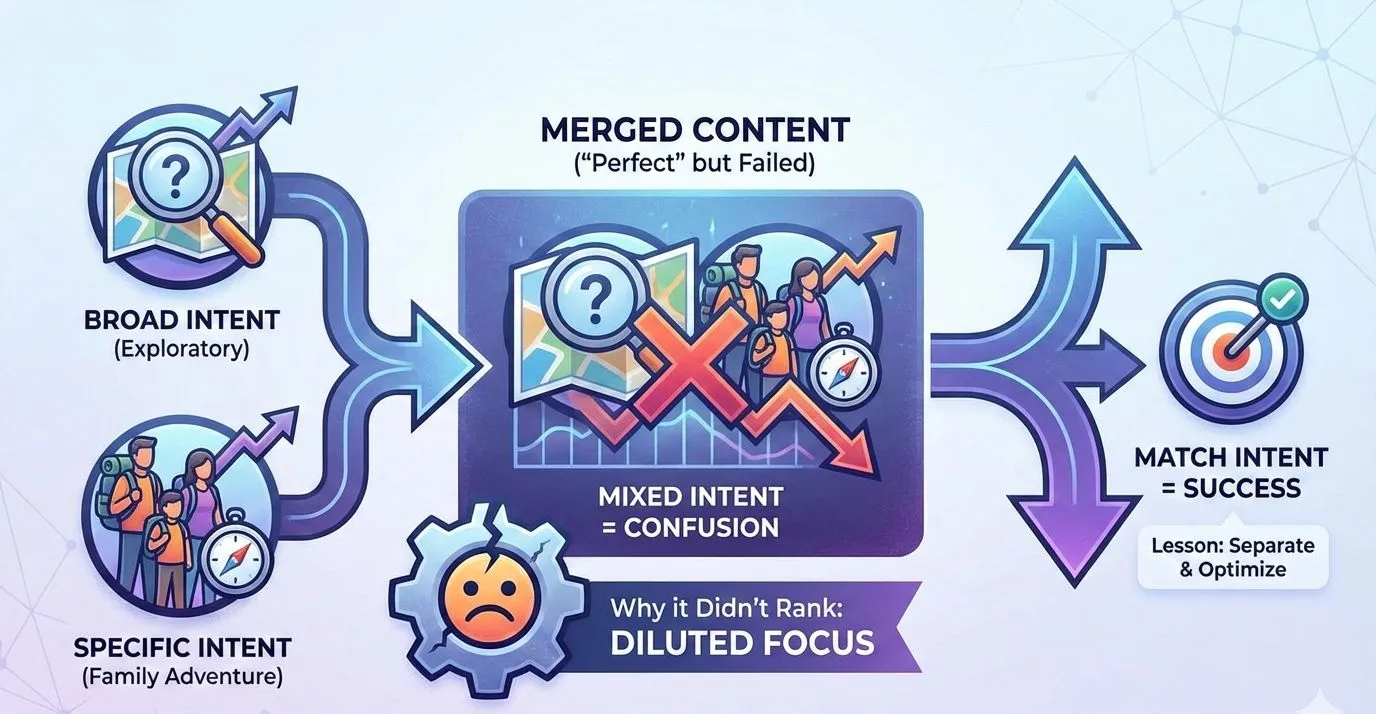
I merged both articles into a single, in-depth guide. Every activity from both pieces made it into the new content. I mixed the keywords strategically, covered all the topics, and wrote everything myself, this time no AI shortcuts.
The result was a complete resource with:
- More comprehensive information than either original article
- Better keyword coverage
- Proper structure and readability
- Genuine, human-written content
I was confident this would rank on the first page. After all, I'd created exactly what Google supposedly wants: thorough, original content that answers multiple related queries.
It's still struggling to rank.
Recommended Read: Internal Linking Case Study of Resort Project
What Went Wrong: Mixed Search Intent
Here's what I've realized: I mixed two different search intents.
Someone searching "things to do in Chitwan" has a broad exploratory intent. They're in research mode, wanting an overview of options. They might be planning a trip and gathering ideas.
Someone searching "adventure activities to do with family" has a specific intent. They've already decided on the type of experience they want and are looking for family-friendly adventure options specifically.
By combining these into one article, I satisfied neither search intent completely. The content became a compromise that tried to serve two different audiences at once.
The Lesson: More Isn't Always Better
In SEO, we're often told that comprehensive content wins. Longer articles with more keywords and more coverage should outrank shorter, narrower pieces.
But that advice misses something crucial: search intent matters more than comprehensiveness.
Google doesn't just want the most information on a topic. It wants the most relevant information for what the searcher is actually looking for.
My combined article had more content, but each original article was probably more focused on its specific search intent. By merging them, I diluted that focus.
What I Should Have Done
Looking back, the better approach would have been to:
- Keep the articles separate
- Optimize each one for its specific search intent
- Make sure they targeted clearly different keyword variations
- Link between them where relevant
Instead of solving keyword cannibalization by combining content, I should have solved it by better differentiating the content and making each piece more targeted with separate keyword research.
The Real Takeaway
Content that looks perfect on paper can still fail in practice. You can have great writing, thorough coverage, proper keywords, and still miss the mark if you're not matching what searchers actually want.
Sometimes the "perfect" SEO content isn't the longest or most comprehensive piece. It's the one that best matches the specific intent behind the search query.
I'm still figuring out how to fix this Chitwan content. Maybe I'll split it back into two pieces. Maybe I'll pivot the focus entirely. But one thing is clear: when something isn't ranking despite looking perfect, the problem is usually search intent, not quality.
Want help with your project? Get in touch .