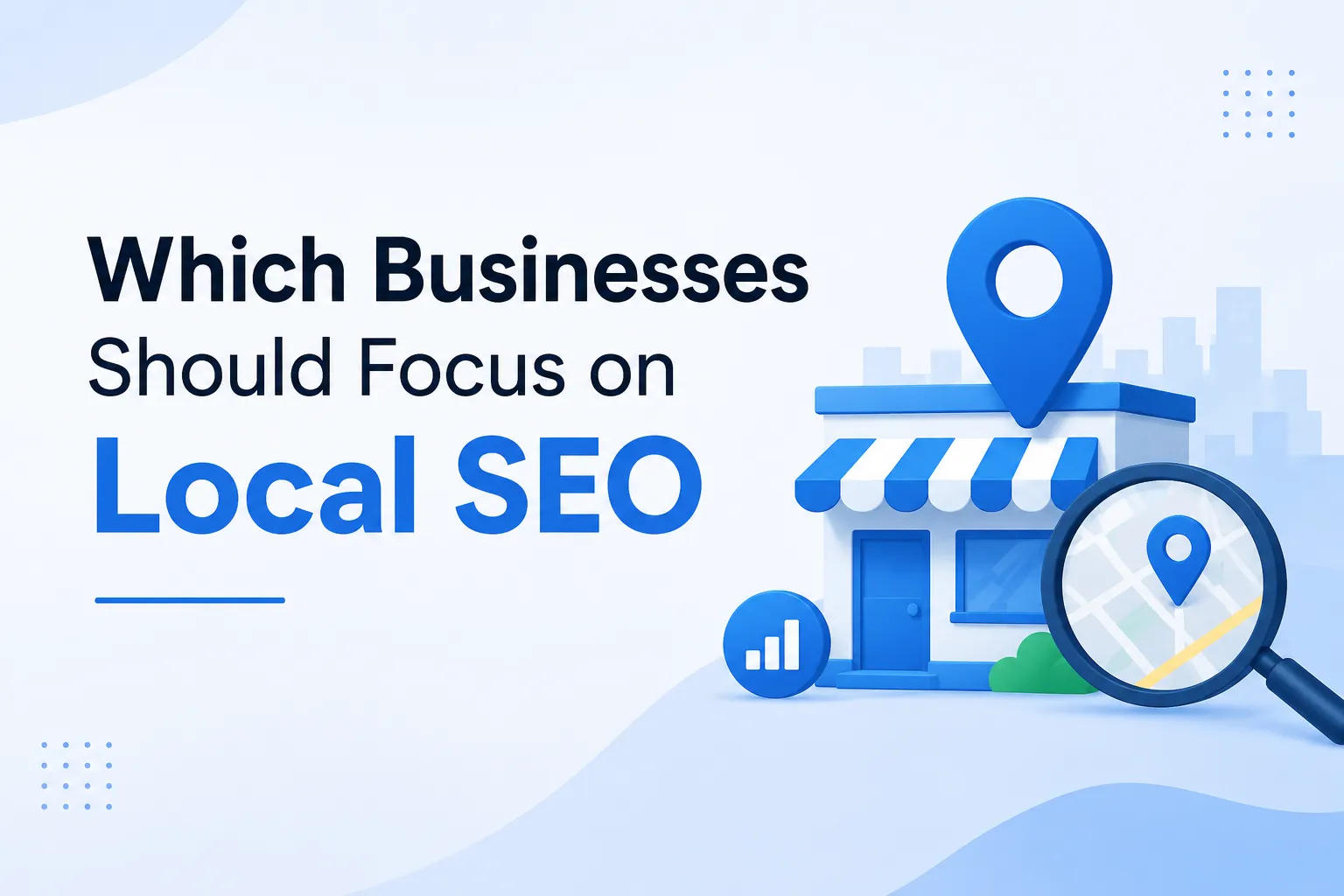
Which Businesses Should Focus on Local SEO?
Think about the last time you needed a restaurant for dinner or a plumber to fix a leaking pipe.
What did you do first?
Chances are, you opened Google and searched for it. Within seconds, you were shown a map with nearby businesses, their ratings, reviews, opening hours, and directions.
Now here's the interesting part.
Those businesses didn't appear there by chance. They've invested in making themselves visible where customers are actively searching and satisfying it. As a result, they're far more likely to receive clicks, calls, and visits.
The businesses that don't appear? They're practically invisible at the exact moment a potential customer is ready to buy.
Not every business needs to make local SEO its highest priority. But if your customers come from a specific city, town, or neighborhood, ignoring local SEO could mean losing qualified customers to competitors who are easier to find.
What Makes a Business a Good Fit for Local SEO?
A common misconception is that every business needs Local SEO.
That's not true.
Local SEO delivers the biggest results for businesses that rely on customers from a particular city, district, or neighborhood.
In general, your business should prioritize Local SEO if it answers yes to one or more of these questions:
- Do customers visit your physical location?
- Do you travel to customers instead of them coming to you?
- Do you serve a specific city or geographic area?
- Do you rely on phone calls, appointments, or walk-in customers?
- Do people search for businesses like yours together with a location?
If the answer is yes, Local SEO isn't just helpful—it's often one of the highest-return marketing investments you can make.
Why Local SEO Matters More Than Ever
Customer behavior has changed.
A few years ago, many people discovered businesses through word of mouth or social media.
Today, the buying journey usually starts with Google.
Before making a decision, people compare businesses, read reviews, look at photos, check opening hours, and see how close each option is.
This is especially true on mobile devices.
Someone searching for "coffee shop near me" while walking through Kathmandu are looking for a place to visit within the next few minutes, not a 1200-word-long paragraph about coffee.
The same is true for emergency plumbers, nearby clinics, gyms, electricians, repair shops, and countless other local businesses.
These are high-intent searches.
If your business appears at that moment, you have an opportunity to earn a customer.
If it doesn't, your competitor probably will.
Local SEO Is About Being Visible at the Right Time
Not every business depends on local search in the same way. A neighborhood café, a dental clinic, and a software company may all have websites, but only some rely on nearby customers making quick decisions based on location, reviews, and convenience.
That difference matters because Local SEO is most valuable when your business competes in a specific area and customers have several nearby options to choose from. In those cases, visibility on Google Search and Google Maps can directly influence calls, visits, and bookings.
Recommended Read: The Complete Google Business Profile Optimization Guide for Local Businesses
Conclusion
Local SEO isn't the right strategy for every business, but for businesses that rely on customers from a specific location, it's one of the most valuable investments you can make.
If people visit your store, book appointments, call for your services, or search for businesses like yours with location-based keywords, showing up in local search results isn't optional—it's expected.
Every day, potential customers search on Google for businesses they can trust. The question isn't whether those searches are happening. It's whether your business appears when they do.
The businesses that consistently show up in Google Search and Google Maps aren't there by luck. They've built a strong local presence through accurate business information, positive reviews, relevant content, and ongoing optimization.
Ready to Improve Your Local Visibility?
If you're wondering whether your business is making the most of Local SEO, I'd be happy to help. I'll review your website and Google Business Profile, identify your biggest local search opportunities, and recommend practical improvements to help you attract more local customers.
Want help with your project? Get in touch .