Can small businesses compete with bigger brands in SEO?
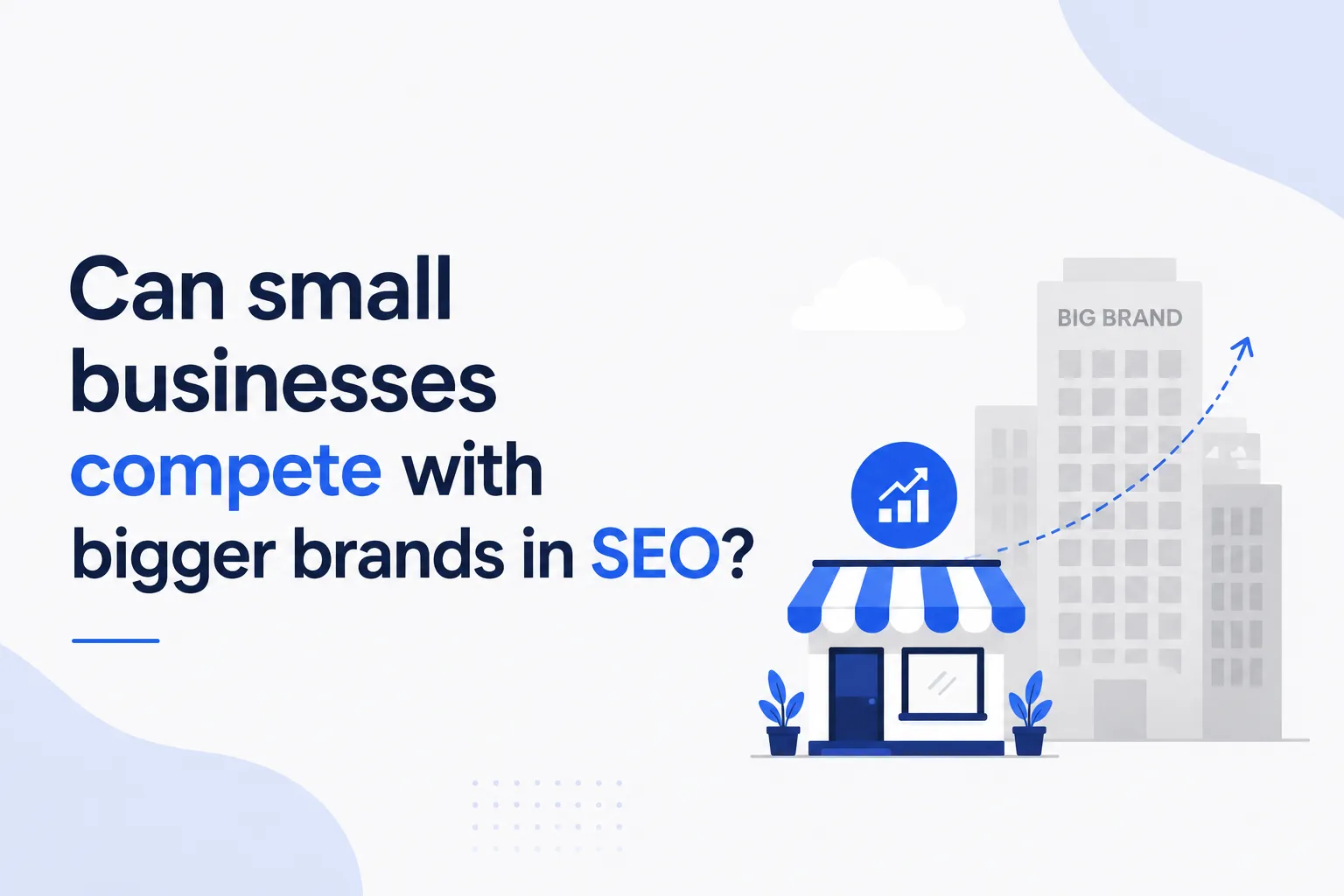
Table of Contents
You search for a product or service in Google.
The first page is filled with familiar names. Amazon, Alibaba, Walmart, and in Nepal, Daraz or other well-known brands often dominate the search results.
After seeing the same names repeatedly, it's easy to think that ranking a small business website is impossible.
But in reality, a small brand can outrank those top giants.
You might be surprised, but you heard it right.
Infact, many have already been outranked.
They don't spend more money or publishing hundreds of articles every month. Instead, they rely on simple SEO and Marketing strategy.
and i.e. understand what their customers are actually searching for and create content that solves those needs better than anyone else.
If a smaller business can provide the best answer, the best local experience, or the most relevant solution, it has a genuine opportunity to earn visibility.
That's why SEO remains one of the few marketing channels where expertise can still outperform size.
Why Big Brands Look Impossible to Beat
To be honest, large companies do have significant advantages.
They've often spent years building their website and ofcourse, established sites get an advantage in ranking. They have dedicated marketing teams, experienced writers, SEO specialists, and thousands of backlinks from reputable websites for a authority.
Their brands are already familiar to millions of people, making them more likely to earn clicks and mentions online.
These signals contribute to stronger rankings, especially for broad and highly competitive searches. Trying to compete directly in a highly competitive keyword is usually the wrong strategy for a small business.
Small Businesses Don't Need to Win Every Search
One of the biggest mistakes small businesses make is chasing the same keywords as large brands.
Imagine opening a dental clinic in Lalitpur.
Should your goal be to rank for "dentist"?
Probably not.
That keyword is extremely broad and tells us very little about what the searcher actually wants.
Now compare it with searches like:
- affordable dentist in Lalitpur,
- emergency dental clinic near me,
- teeth whitening in Lalitpur,
- braces consultation Kathmandu,
These searches are much more specific.
More importantly, they usually come from people who already know what they need and are actively looking for a service provider.
Instead of competing for millions of searches, you're competing for the searches that are most likely to become appointments.
That's a far better business strategy.
Relevance Matters More Than Size
One of the biggest strengths a small business has is focus.
Large companies usually create content for broad audiences. Their websites need to cover dozens, or even hundreds, of product categories, services, and customer types.
A small business doesn't have that problem.
This is where concepts like Topical authority become important.
Rather than publishing random articles, successful small businesses build depth around one subject. They consistently answer related questions, create helpful resources, and demonstrate expertise over time.
Search engines increasingly reward websites that become trusted sources within a specific topic.
That means a specialist often has an advantage over a generalist.
The Real Goal Isn't to Beat Everyone
Many business owners think SEO is about outranking every competitor.
It isn't.
The real goal is to become the best answer for the customers you actually want to attract.
A local accounting firm doesn't need visitors from every city in the country. A restaurant doesn't need to rank globally. A trekking company doesn't need to compete with every travel website on the internet.
They need to be visible when their ideal customers are searching.
That's where small businesses can compete surprisingly well.
Final thought
Small businesses do not need to outspend big brands to win in SEO. They need to be more specific, more helpful, and more relevant to the people they want to serve. When you focus on the right keywords, local intent, and useful content, you can build visibility that actually drives leads and sales.
If you want to compete with bigger brands, start with the pages that matter most: your homepage, your main service pages, and your Google Business Profile. Then create one useful piece of content that answers a real customer question better than your competitors do. That is often the fastest and most realistic way to build momentum.
Need help competing with bigger brands on Google? Get in touch for professional SEO services, and let's build a strategy that drives more traffic, leads, and sales for your business.
Recommended Read: Which Businesses Should Focus on Local SEO?
FAQs
Can a small business really rank above a big brand?
Yes. Small businesses can outrank larger competitors for local, niche, and long-tail searches when their content is more relevant and useful.
What is the easiest SEO win for a small business?
Targeting specific search terms with clear buying intent, especially local keywords, is often the fastest way to get results.
How long does SEO take for a small business?
It depends on competition and website quality, but meaningful improvements usually take a few months of consistent effort.
Want help with your project? Get in touch .