Why New Websites Don't Rank on Google Immediately
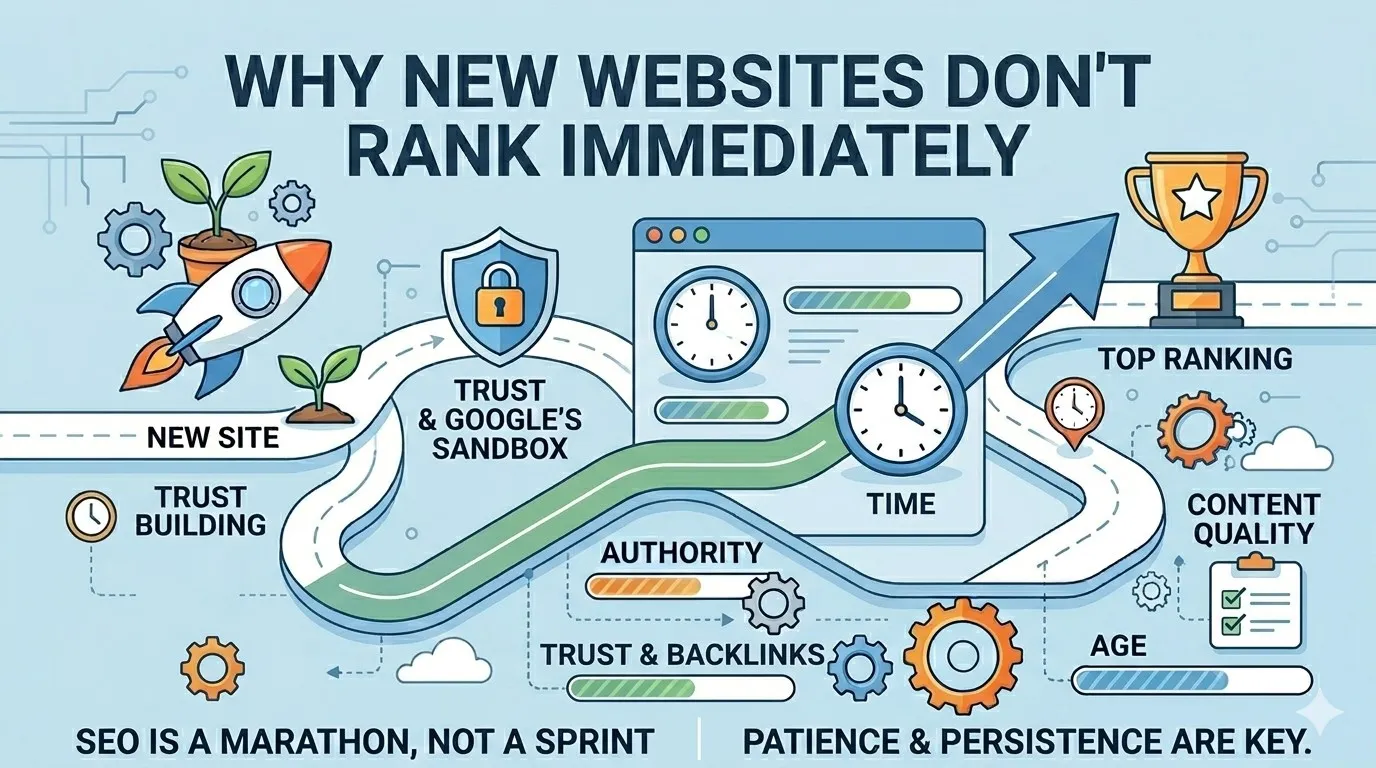
Table of Contents
- Your New Website Is Like Someone With No Credit History
- Google Is the Bank. Trust Has to Be Earned.
- Backlinks Are Your References
- Your Content Is Your Financial Activity
- Time Is Your Repayment History
- So What Do You Actually Do While You Wait?
- The Credit Score Parallel Holds All the Way Through
- Frequently Asked Questions
- How long does it take for a new website to rank on Google?
- Is the Google Sandbox real?
- Does publishing more content help a new site rank faster?
- Why do some new websites rank quickly?
- What's the most important thing to focus on in the first 6 months?
- Can I speed up the trust-building process?
You just launched your website. You wrote a few blog posts, maybe even hired someone to do keyword research. You search your target keyword on Google.
Nothing.
Not on page one. Not on page five. Nowhere.
Before you panic, before you start questioning everything—let me tell you something that took me embarrassingly long to understand. Your website not ranking immediately isn't a bug. It's not even a mystery. It's actually pretty logical once you think about it the right way.
Here's the analogy that finally made it click for me.
Your New Website Is Like Someone With No Credit History
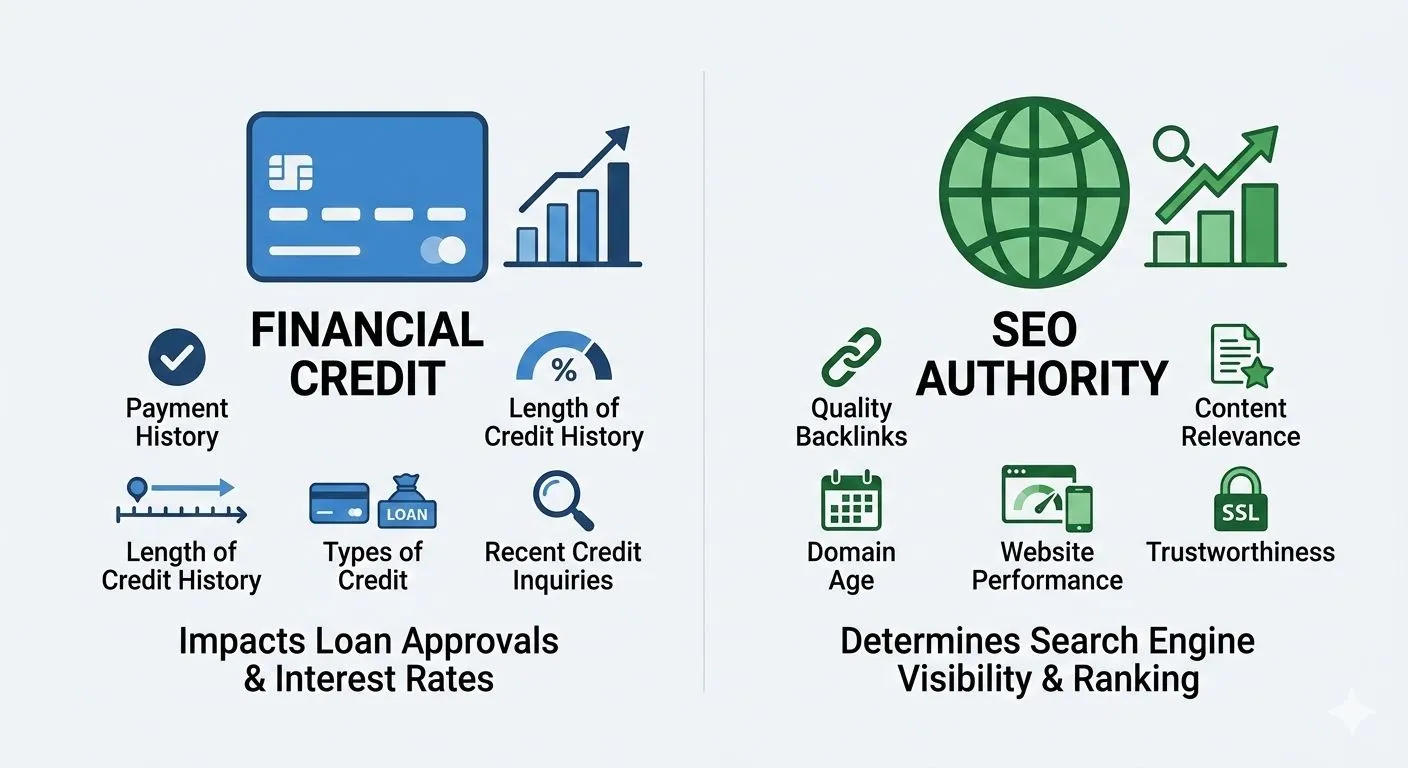 Think about what happens when you walk into a bank and apply for a loan with zero credit history.
No previous loans. No credit card payments. No financial track record whatsoever.
The bank doesn't automatically say no. But they're not going to hand you a massive loan either. They don't know you yet. You haven't proven anything to them. They need time and evidence before they trust you with something valuable.
Google works the same way with new websites—and once I understood this, the whole "why isn't my site ranking?" question basically answered itself.
Google Is the Bank. Trust Has to Be Earned.
Google's entire job is to send people to the most trustworthy, relevant results for a given search. If someone searches " SEO expert in Nepal," Google needs to be confident the result it shows is actually good—not just a brand-new site that appeared last week with a few posts.
A new website with no history, no links, no traffic data? Google simply doesn't have enough signals yet to trust it with a top ranking. It's not personal. It's risk management.
This is what people in the SEO world call the "Google Sandbox"—an informal name for the period where new sites seem stuck regardless of how well-optimized their content is. But honestly, "sandbox" never made it intuitive to me. The credit score analogy is way more useful.
Backlinks Are Your References
When you apply for a job with no work history, references matter enormously. Someone else vouching for you carries weight.
In Google's world, backlinks are those references. When other websites link to yours, they're essentially saying: "This source is worth pointing people to." The more credible those referring sites are, the stronger the signal.
A brand new website has zero backlinks. No one has vouched for you yet. Google sees this and keeps its trust level appropriately low. Makes sense, right?
This is why link building is such a core part of SEO—not as some shady tactic, but because it's genuinely how you build credibility in Google's eyes over time. Each quality backlink is a reference saying your site is legitimate.
Your Content Is Your Financial Activity
Back to the credit score analogy: a big factor in your credit score is your financial activity—are you making purchases, paying things off, demonstrating responsible use?
For a website, that's your content. Every blog post you publish, every page you optimize, every search query your content addresses—that's you showing Google you're actively engaged, you're building something real, and you're covering topics with depth.
A site that publishes one post and goes quiet for months? Google notices. A site that consistently produces quality content that actually helps people? That's the financial behavior that starts building a positive track record.
Here's the thing though: content alone doesn't fast-track you. Just like responsible spending in month one doesn't give you a 750 credit score overnight.
Time Is Your Repayment History
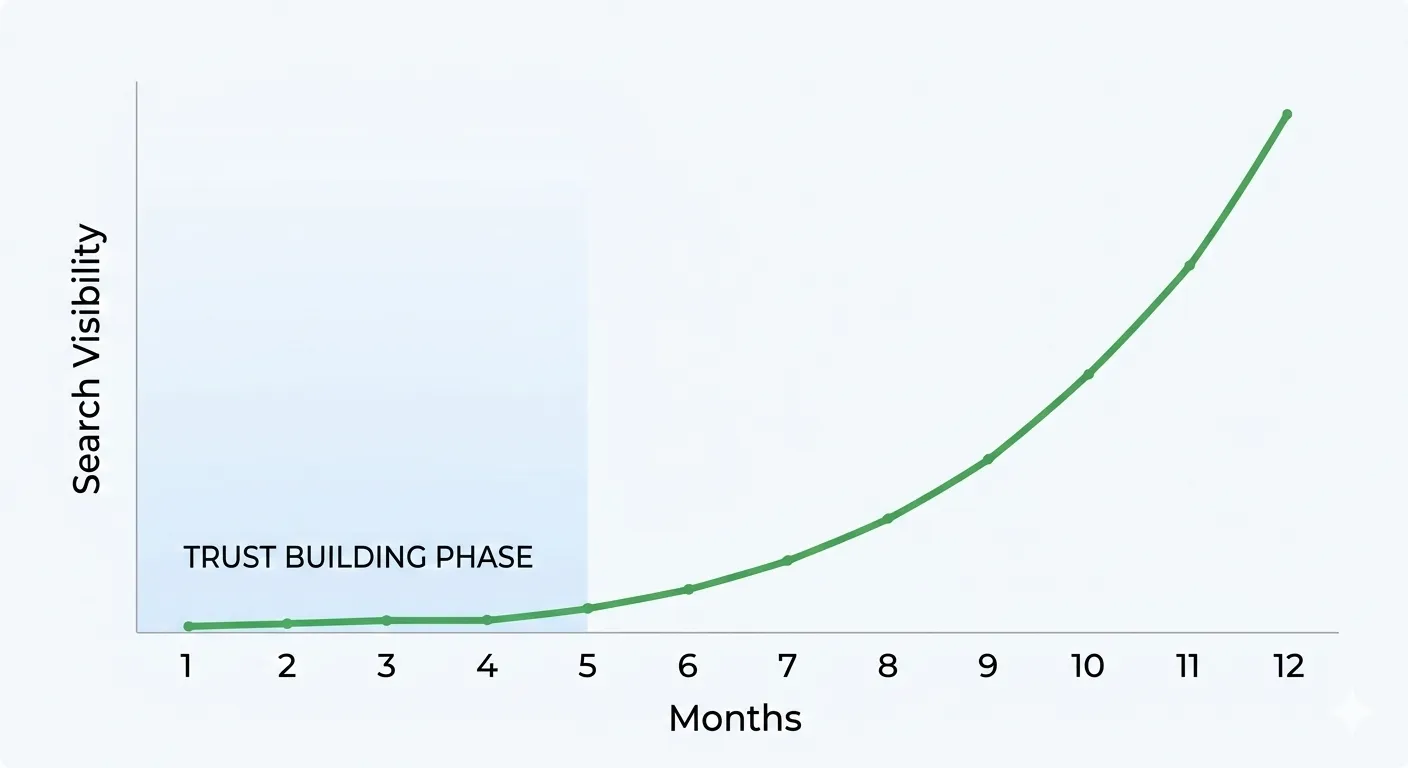 This is the part nobody wants to hear—and the part that's completely non-negotiable.
Your repayment history is the longest-weighted factor in your credit score. You can do everything else right, but you can't fake years of consistent, on-time payments. Time has to pass. A track record has to form.
New websites immediately are just not how Google works—and honestly, it probably shouldn't be. If any site could rank instantly, the top results would be flooded with low-effort, quickly-built sites trying to cash in on every trend.
The time factor is what protects the search results from being completely gamed.
In practice, most new websites don't start seeing meaningful organic traffic for at least 3–6 months. Some niches take longer—12 months or more isn't uncommon if the competition is high. This isn't a failure. It's the system working as intended.
So What Do You Actually Do While You Wait?
Here's where I want to be real with you: "just wait" is bad advice. Yes, time is required—but what you do during that time determines what position you're in when the trust finally kicks in.
A few things that actually move the needle:
Keep publishing consistently. One post every three months won't cut it. Regular publishing signals that your site is active and expanding its topical coverage.
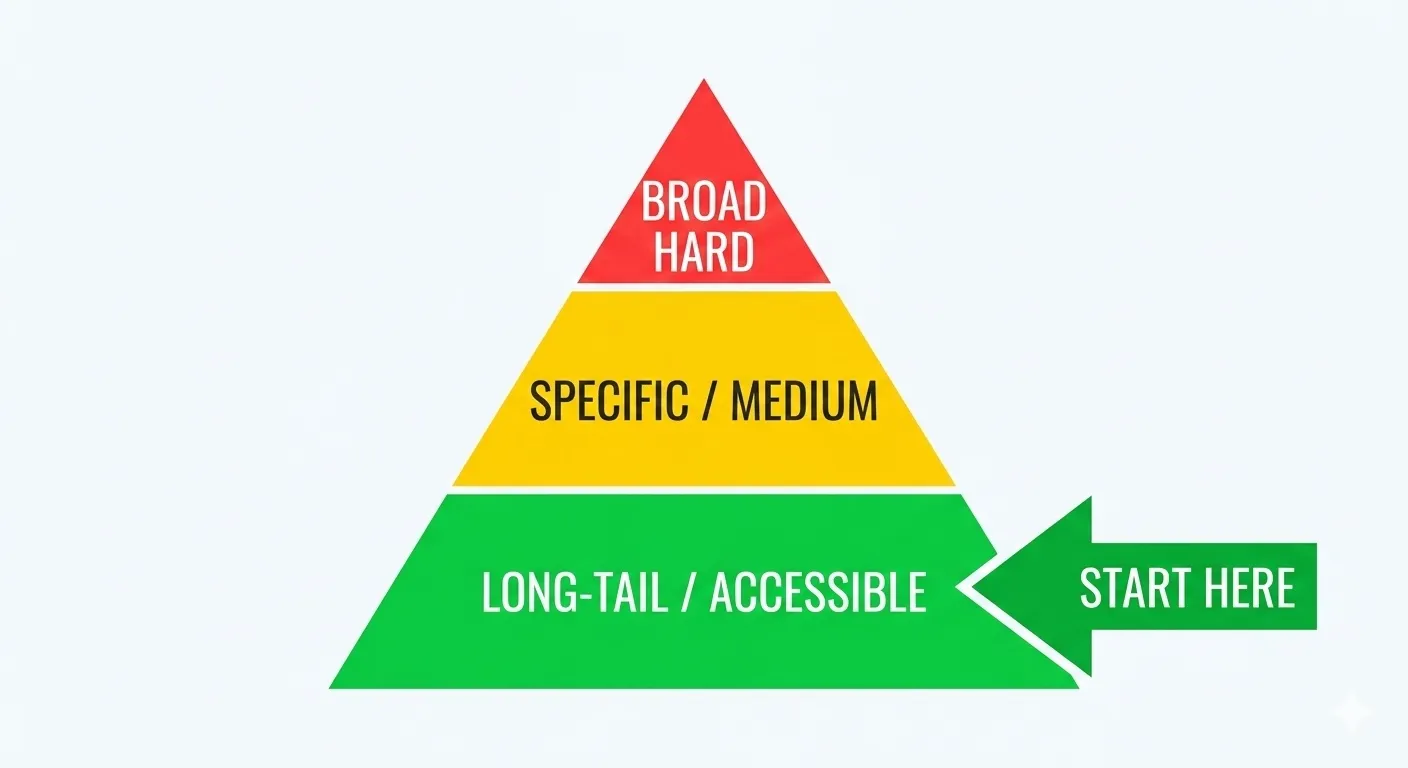
Focus on lower-competition keywords first. New sites trying to rank for broad, high-volume terms are fighting an uphill battle. Start with specific, long-tail queries where the bar to rank is more realistic. Win there first.
Build real backlinks. Write for other sites, get featured in relevant roundups, create content genuinely worth linking to. One good backlink from a credible source matters more than ten from random directories.
Fix technical issues early. Slow load times, poor mobile experience, crawl errors—these won't help you once trust builds if your site is technically broken. Get the foundation right.
Use Google Search Console. This tool shows you what queries you're starting to appear for, even before you rank well. It tells you Google is indexing you and paying attention—which is actually encouraging when you're in that early "nothing is happening" phase.
The Credit Score Parallel Holds All the Way Through
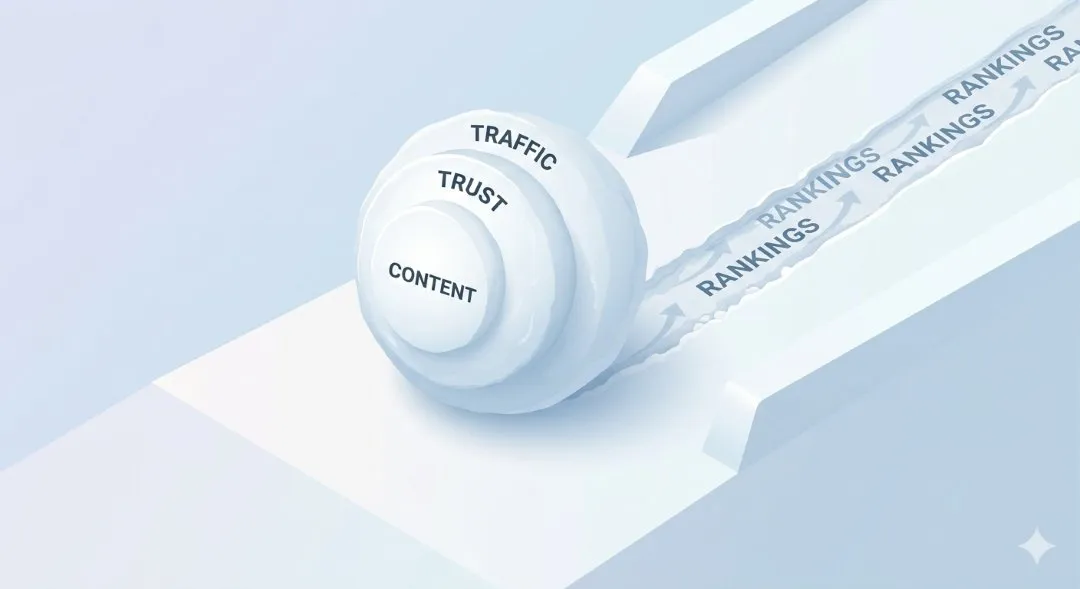
Here's what I find genuinely reassuring about this analogy: just like credit, once you build the score, it starts working for you.
A site with six months of consistent content, quality backlinks, and solid technical SEO starts to rank. Then it gets traffic. Then that traffic signals to Google that people find it useful. Then it ranks even better. The momentum compounds—just like how a strong credit history makes getting the next loan easier.
The new website phase is the hardest part. Not because it's impossible, but because you're doing real work with almost no visible feedback. That's disorienting. Most people quit here.
Don't quit here.
Recommended Read: 5 Backlink Mistakes I Made as an SEO Newbie
Frequently Asked Questions
How long does it take for a new website to rank on Google?
Most new websites start seeing meaningful organic rankings between 3–6 months after launch. In competitive niches, it can take 9–12 months or longer. This timeline depends on the consistency of your content, your backlink profile, and how well your site is technically optimized.
Is the Google Sandbox real?
It's not an officially confirmed Google system, but the phenomenon is real—new sites consistently experience a period where they don't rank well regardless of content quality. The most practical explanation is that Google simply hasn't collected enough trust signals yet to confidently rank a new domain.
Does publishing more content help a new site rank faster?
Yes, to a degree. More content gives Google more signals to index and evaluate. But quality matters more than quantity. Ten well-researched posts targeting specific queries will do more than thirty thin articles chasing broad terms.
Why do some new websites rank quickly?
Usually because they're on aged domains with existing authority, they're targeting extremely low-competition queries, or they've quickly acquired strong backlinks. For truly new domains with no history, fast rankings are the exception, not the rule.
What's the most important thing to focus on in the first 6 months?
Content consistency and technical health. Publish regularly, target realistic keywords, make sure your site is indexed properly, and start building backlinks where you can. Think of this period as making your first responsible financial moves—you're building the history that will pay off later.
Can I speed up the trust-building process?
You can't skip time, but you can use it better. High-quality backlinks from credible sources accelerate trust signals. Publishing genuinely useful, in-depth content on topics you can realistically compete on helps too. There are no real shortcuts—but there are definitely faster and slower ways to build the same foundation.
Want help with your project? Get in touch .