Why Google Doesn't Trust New Websites
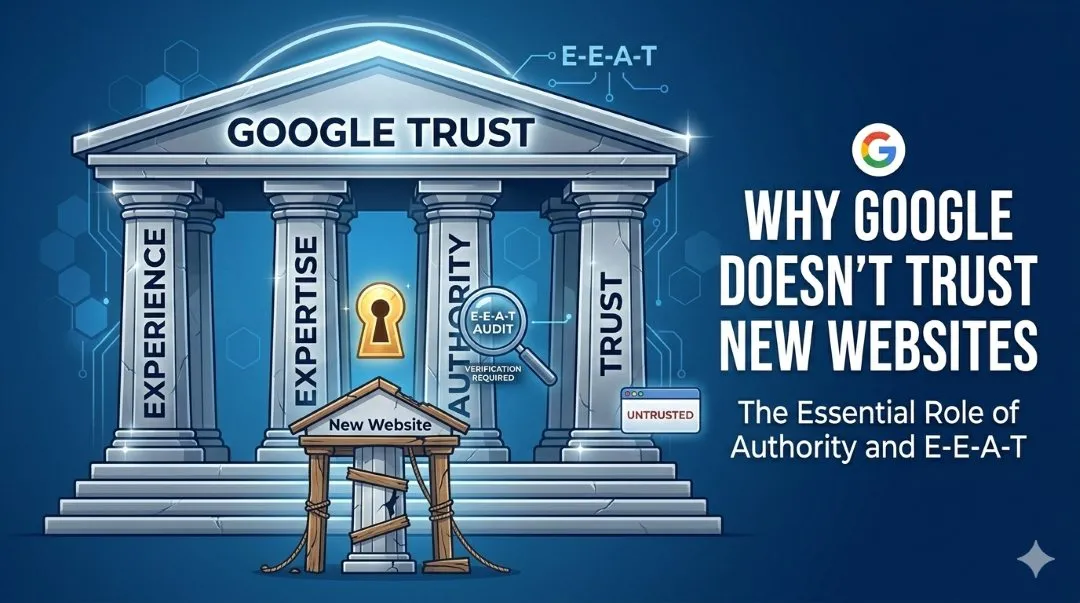
Table of Contents
- Google's Real Priority Is the Searcher, Not Your Website
- Why YMYL Niches Face a Much Higher Bar
- What Is E-E-A-T — And Why It's Not a Ranking Factor
- Experience
- Expertise
- Authoritativeness
- Trustworthiness
- What This Means for a New Website
- Frequently Asked Questions
- What does YMYL mean in SEO?
- Is E-E-A-T a Google ranking factor?
- How long does it take for Google to trust a new website?
- How can a new website build trust faster?
- Does E-E-A-T matter for non-YMYL websites?
Google has one job: give people the most useful, trustworthy result for whatever they're searching.
Not the newest result. Not the most optimized result. The most trustworthy one.
When you launch a new website, Google doesn't know you yet. It has no history with you, no signals from other sources about your credibility, and no evidence of how real users respond to your content. From Google's perspective, sending traffic to an unknown website is a risk — and Google is very conservative about risk when the person searching is relying on that result to make a real decision.
This is the core reason new websites don't rank immediately. It's not a penalty. It's not a bug. It's Google doing exactly what it's supposed to do: protecting the people using its search engine.
Google's Real Priority Is the Searcher, Not Your Website
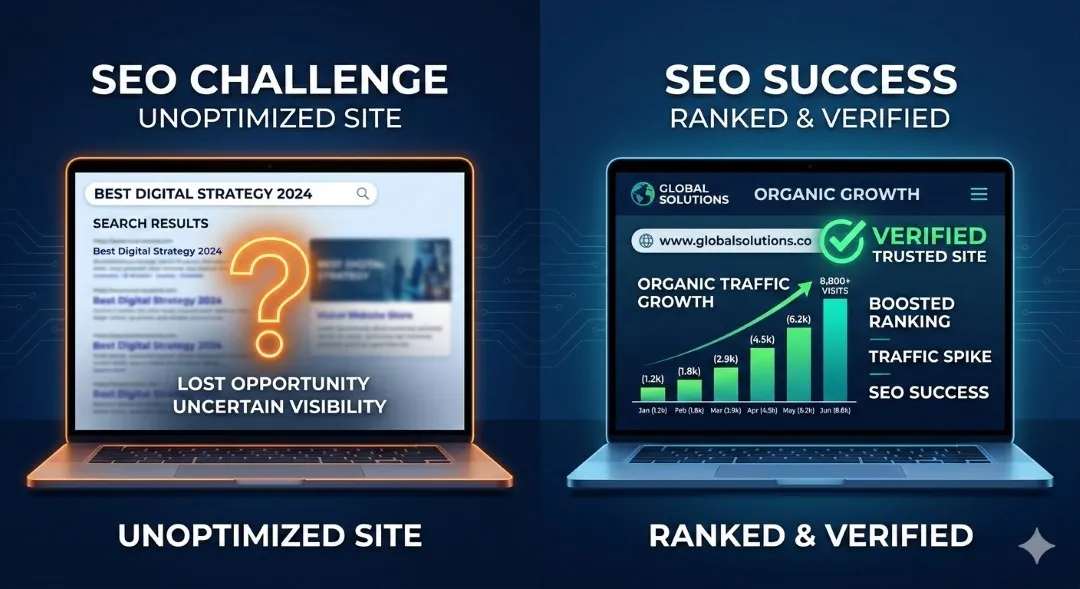 It helps to understand what Google is actually optimizing for. Every time someone searches something, Google is trying to predict: which result will leave this person most satisfied?
Satisfaction here means more than just finding information. It means finding accurate information. Trustworthy information. Information that actually helps them do what they came to do — whether that's learning something, buying something, solving a problem, or making a decision.
A new website, regardless of how well it's built, hasn't proven it can deliver that satisfaction consistently. Google has no click data on it. No engagement patterns. No external signals confirming its credibility. No track record.
So Google waits. It observes. It collects signals over time before it starts trusting a new site with meaningful rankings.
This waiting period is especially long — and especially strict — in certain types of niches.
Why YMYL Niches Face a Much Higher Bar
YMYL stands for "Your Money or Your Life." It's Google's informal category for topics where bad information can cause real harm to real people.
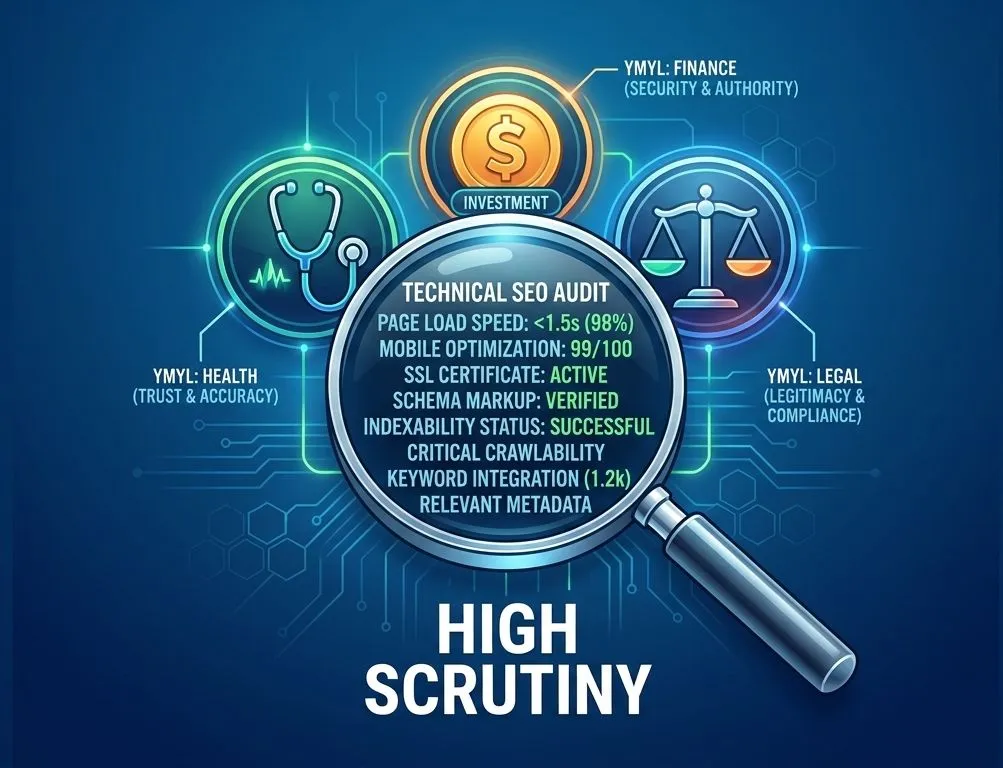
YMYL topics include things like: medical advice, financial guidance, legal information, insurance, mental health, news and current events, and anything related to safety. If someone searches "symptoms of a heart attack" or "how to file for bankruptcy" and lands on inaccurate content, the consequences aren't just a wasted click — they could be genuinely damaging.
Because of this, Google applies a significantly higher trust threshold to YMYL content. A new website covering health, finance, or legal topics will face a much longer and harder trust-building process than, say, a blog about travel destinations or recipes.
This isn't Google being unfair. It's Google being appropriately cautious. The stakes are higher, so the scrutiny is higher.
If your website operates in or near a YMYL space, understanding this early saves you from months of frustration wondering why your well-written content isn't moving. The content quality is only one part of the equation. Trust — demonstrated over time, across multiple signals — is the other part. And trust can't be rushed.
What Is E-E-A-T — And Why It's Not a Ranking Factor
This is where a lot of people get confused, so let me be clear upfront: E-E-A-T is not a direct ranking factor. Google has confirmed this. There is no E-E-A-T score. You cannot optimize a page for E-E-A-T the way you optimize it for a keyword.
What E-E-A-T actually is: a framework Google's quality raters use to evaluate whether content meets a high standard of trustworthiness and usefulness. It informs how Google trains and refines its algorithm — but it's not a dial you can turn up.
That said, understanding it matters enormously. Because the signals that build E-E-A-T are exactly the signals Google uses to decide whether a new website is worth trusting. Think of it as a description of what trustworthy content looks like — and a map of what you need to build toward.
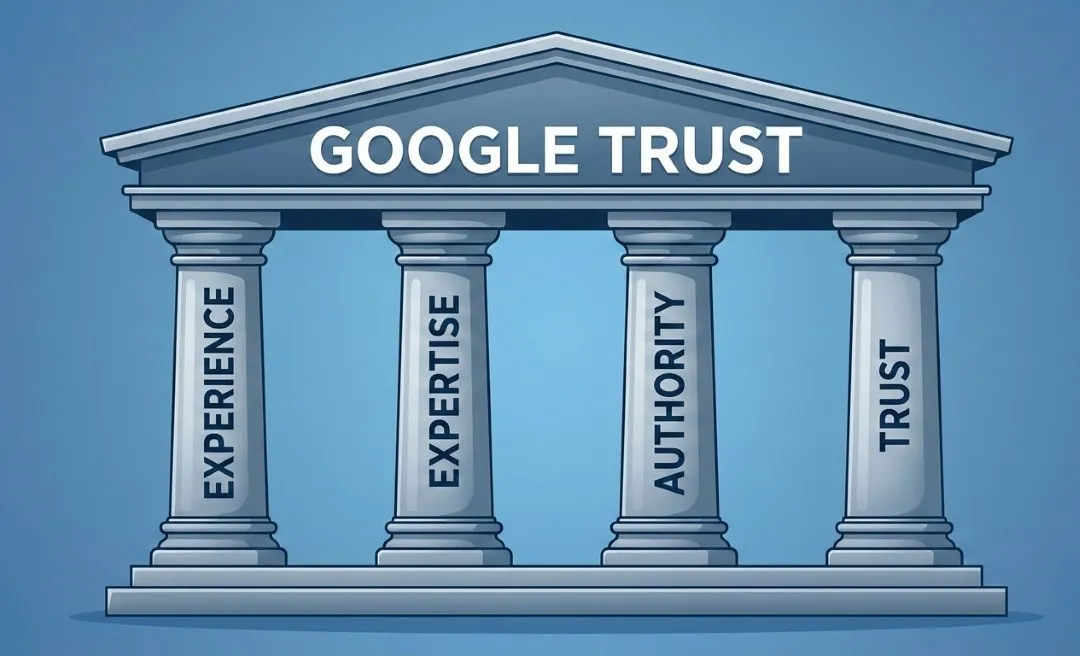
Here's what each component actually means in practice.
Experience
The first E was added relatively recently, and it's significant. Experience refers to first-hand, real-world engagement with the topic. Not just research — actual lived experience.
A review written by someone who genuinely used the product carries more weight than a summary compiled from other reviews. A travel guide written by someone who visited the destination is more valuable than one assembled from photos and Wikipedia. An SEO blog written by someone actively doing SEO work — making mistakes, testing things, seeing real results — is more credible than one written purely from theory.
For a new website, this means: don't just write about topics. Write from your genuine experience with them. Show the work. Share the specifics. The more your content reflects real engagement with the subject, the more it signals experience — and the faster Google starts treating it like a credible source. This is actually something I try to do consistently, and you can see the approach in how I document things like the SEO shortcuts I tried and regret — real experience, not just theory.
Expertise
Expertise is about demonstrated knowledge depth. Does this content show genuine understanding of the subject — not just surface familiarity, but real command of the nuances, the edge cases, the things that only someone who knows the topic well would address?
For YMYL topics especially, expertise needs to be verifiable. A medical article should be written or reviewed by a qualified medical professional. A financial guide should reflect actual financial knowledge. In non-YMYL niches, expertise is demonstrated through the quality and depth of the content itself.
This is why shallow, generic content struggles to rank — even when it's technically optimized. Understanding common SEO terms is one thing; demonstrating genuine expertise means going deeper than definitions and showing real understanding of how these things connect and interact.
Authoritativeness
Authority is largely external. It's what other sources say about you — not what you say about yourself.
Backlinks from credible, relevant websites are the clearest signal of authority. If other trusted sources in your field link to your content, recommend your site, or cite your work, that tells Google you're recognized as a credible voice. A new website has none of this yet — which is one of the main reasons it takes time to rank.
Authority also shows up in brand mentions, press coverage, citations, and the overall reputation of a site within its industry. It builds slowly, through consistent work and content that genuinely earns attention. The backlink mistakes SEO beginners should avoid is worth reading here — because trying to shortcut authority-building almost always backfires.
Trustworthiness
Trust is the broadest component and, according to Google, the most important one. It encompasses everything: accurate information, transparent authorship, honest business practices, a secure website, clear contact information, and content that puts the user's interests first.
For a new website, trust signals include: having a real About page, clear author information, accurate and well-sourced content, a functional contact page, and no deceptive practices. These seem basic — but many new sites skip them in the rush to publish content, and Google notices.
Trustworthiness also means your content does what it promises. If someone clicks your result expecting a specific answer and your page buries it, over-qualifies it, or doesn't deliver it at all — that's a trust problem. Google picks up on engagement patterns that reflect exactly this.
What This Means for a New Website
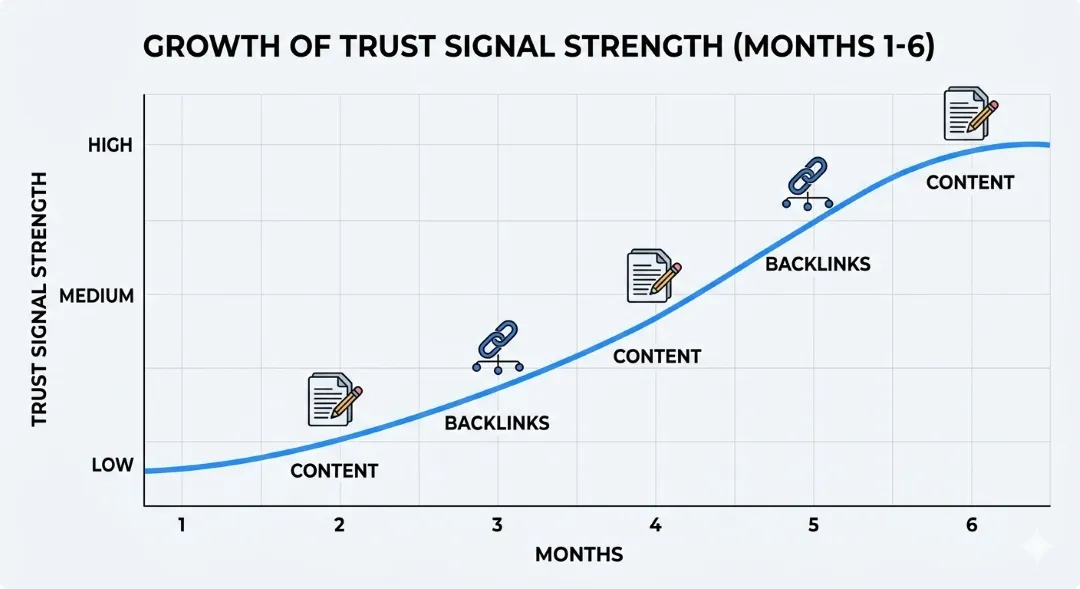
Understanding Google's trust framework reframes the early months of a new site completely.
The goal isn't to hack your way to rankings quickly. The goal is to build the kind of presence that Google — and more importantly, real people — can genuinely trust. That means publishing content grounded in real experience and expertise. It means being transparent about who you are and what you do. It means earning external recognition through quality rather than shortcuts.
For YMYL sites specifically, it means being especially rigorous about accuracy, sourcing, and demonstrating real credentials where they exist.
None of this happens overnight. But every piece of content you publish, every backlink you earn, every positive user engagement signal you accumulate — it all compounds. What happens when your content actually matches what people are searching for is a completely different experience from publishing content that technically covers a topic but doesn't earn real trust.
Google doesn't distrust new websites because it's unfair. It distrusts them because it hasn't had enough time to verify them. Give it that time — and give it real signals to work with — and the trust eventually comes.
Frequently Asked Questions
What does YMYL mean in SEO?
YMYL stands for "Your Money or Your Life" — a category of topics where inaccurate or low-quality content could cause real harm to users. It includes medical, financial, legal, and safety-related content. Google applies stricter quality standards to YMYL pages, meaning new sites in these niches face a higher bar to rank.
Is E-E-A-T a Google ranking factor?
No. Google has confirmed that E-E-A-T is not a direct ranking factor — there is no E-E-A-T score that influences rankings. It's a framework used by Google's quality raters to evaluate content quality, which in turn informs how Google trains its algorithm. You can't optimize for E-E-A-T directly, but building genuine experience, expertise, authority, and trust will improve the signals Google uses to rank your content.
How long does it take for Google to trust a new website?
It varies depending on your niche, content quality, and how actively you're building authority signals. For most sites, meaningful trust starts building after 3–6 months of consistent, quality content. For YMYL niches, it can take significantly longer. There's no shortcut — the timeline reflects real signal accumulation, not arbitrary delay.
How can a new website build trust faster?
Focus on publishing genuinely useful, experience-backed content consistently. Make your site transparent — real author information, an honest About page, clear contact details. Earn backlinks from credible sources in your space. Avoid shortcuts like thin content or manipulative link schemes. Each of these contributes to the trust signals Google is looking for.
Does E-E-A-T matter for non-YMYL websites?
Yes, though the threshold is lower. Google applies E-E-A-T standards to all content — YMYL sites just face stricter scrutiny because the potential harm from bad information is higher. For any site, demonstrating genuine experience, depth of knowledge, and trustworthy content will improve how Google evaluates your pages over time.
Want help with your project? Get in touch .