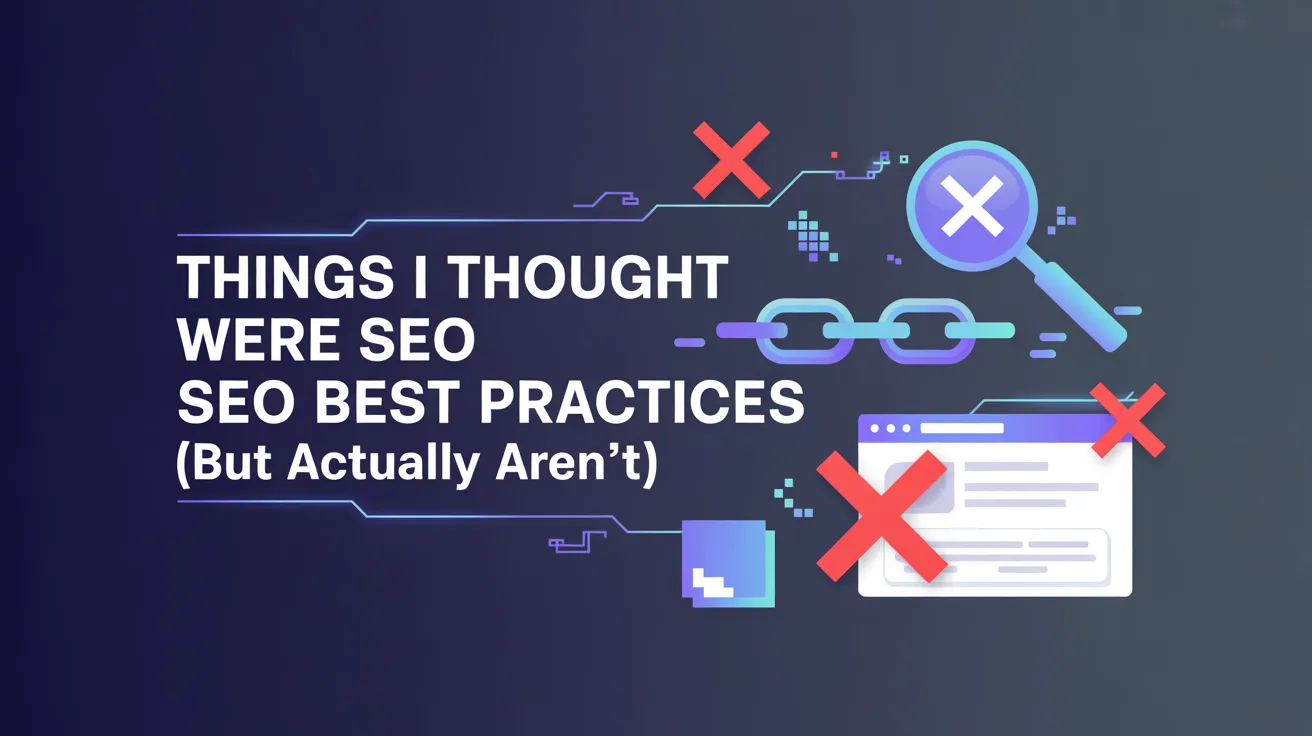
5 Things I Thought Were SEO Best Practices (But Actually Aren't)
After nine months of diving deep into search engine optimization, I've discovered something eye-opening: many practices we consider essential SEO tactics have far less impact than we're led to believe. The SEO community often circulates advice that sounds authoritative but doesn't align with what actually moves the ranking needle.
Like many beginners, I followed what experts, influencers, and course creators taught without questioning. We focus heavily on certain elements because everyone says they matter, not because they demonstrably improve rankings. The reality? Some widely promoted "best practices" are just industry fluff that waste time and resources.
Today, I'm sharing five things I genuinely believed were crucial SEO best practices—but have since learned they're not the ranking factors I thought they were.
1. Schema Markup
I spent countless hours implementing schema markup across websites, convinced it was a major ranking factor. The truth hit hard when I discovered that schema doesn't directly impact rankings. According to Google's own documentation, structured data helps search engines understand your content better and can improve how your pages appear in search results through rich snippets, but it's not a ranking signal.
Yes, schema is still valuable for enhancing search appearance and potentially improving click-through rates, but if you're prioritizing it over actual ranking factors like content quality and backlinks, you're misallocating your efforts. Schema is a nice-to-have, not a must-have for ranking success.
2. Meta Keywords Tag
I used to think on-page SEO essentially meant optimizing meta tags, especially stuffing keywords into meta descriptions and keyword tags. This was perhaps my biggest misconception. Google officially stopped using the meta keywords tag as a ranking factor back in 2009, yet many SEO guides still emphasize it heavily.
While meta descriptions matter for click-through rates and user experience, they don't directly influence rankings. Google often rewrites them anyway based on the search query. The hours I spent crafting perfectly keyword-optimized meta tags could have been better spent creating genuinely valuable content that naturally incorporates relevant terms.
3. Perfect UI/UX Design
"Make your website user-friendly and it will rank higher" was a mantra I heard repeatedly. I believed that exceptional UI/UX design was a direct ranking factor. While user experience matters, the correlation isn't as straightforward as I thought.
A website with strong domain authority and quality backlinks can rank well even with mediocre design, while a beautifully designed site without authority struggles to gain visibility. User experience affects engagement metrics that might indirectly influence rankings, but it's not a primary ranking factor. Focus first on building authority and creating valuable content—polish the design afterward.
4. Obsessing Over Page Speed
I spent significant time and money optimizing page speed, aiming for perfect scores on speed testing tools. While Core Web Vitals are confirmed ranking factors, obsessing over shaving milliseconds off load time when your site already passes Core Web Vitals thresholds doesn't provide additional ranking benefits.
If your website has decent Core Web Vitals, investing more time in speed optimization yields diminishing returns. That energy is better spent creating content that provides genuine value to visitors. A fast website with poor content won't outrank a slightly slower site with exceptional, relevant content.
5. Geotagging Every Image
For local SEO projects, I diligently added geotags to every single image before publishing. I learned this as an essential local SEO practice in my early training. After deeper research and testing, I realized this was largely ceremonial.
If you're using original images taken in your business location, geotagging adds minimal value. Google is sophisticated enough to understand your location through far stronger signals like your Google Business Profile, NAP citations, and content context. The hours spent geotagging hundreds of images could have been invested in acquiring local backlinks or creating location-specific content.
The Lesson Learned
These five practices aren't completely worthless, but they're heavily overemphasized in SEO circles. The industry perpetuates certain myths because they sound technical and actionable, making them easy to teach and sell.
My biggest takeaway from nine months in SEO? Question everything, even advice from so-called experts. Prioritize what Google actually confirms as ranking factors: high-quality, relevant content, authoritative backlinks, technical SEO fundamentals, and genuine user value. Everything else is secondary.
In Nepal's growing digital marketing industry, where many professionals are still learning SEO fundamentals, understanding what truly matters can save countless hours and help you focus on strategies that deliver real results. Don't blindly follow what everyone preaches—test, measure, and focus your efforts on what demonstrably improves your rankings and traffic.
Want help with your project? Get in touch .